SurveyMonkey Template Gallery:
Replacing iFrames and Adding Search
Role: Supporting UX Designer
Timeline: 3 months
Scope: Supported early prototyping, then owned responsive design and documentation. Co-ran two rounds of user testing with another designer. Results below are a team outcome.
TL;DR: Testing showed users wanted search, which the first design didn't have. We added it, and once it existed it became the preferred way to find templates.
Problem
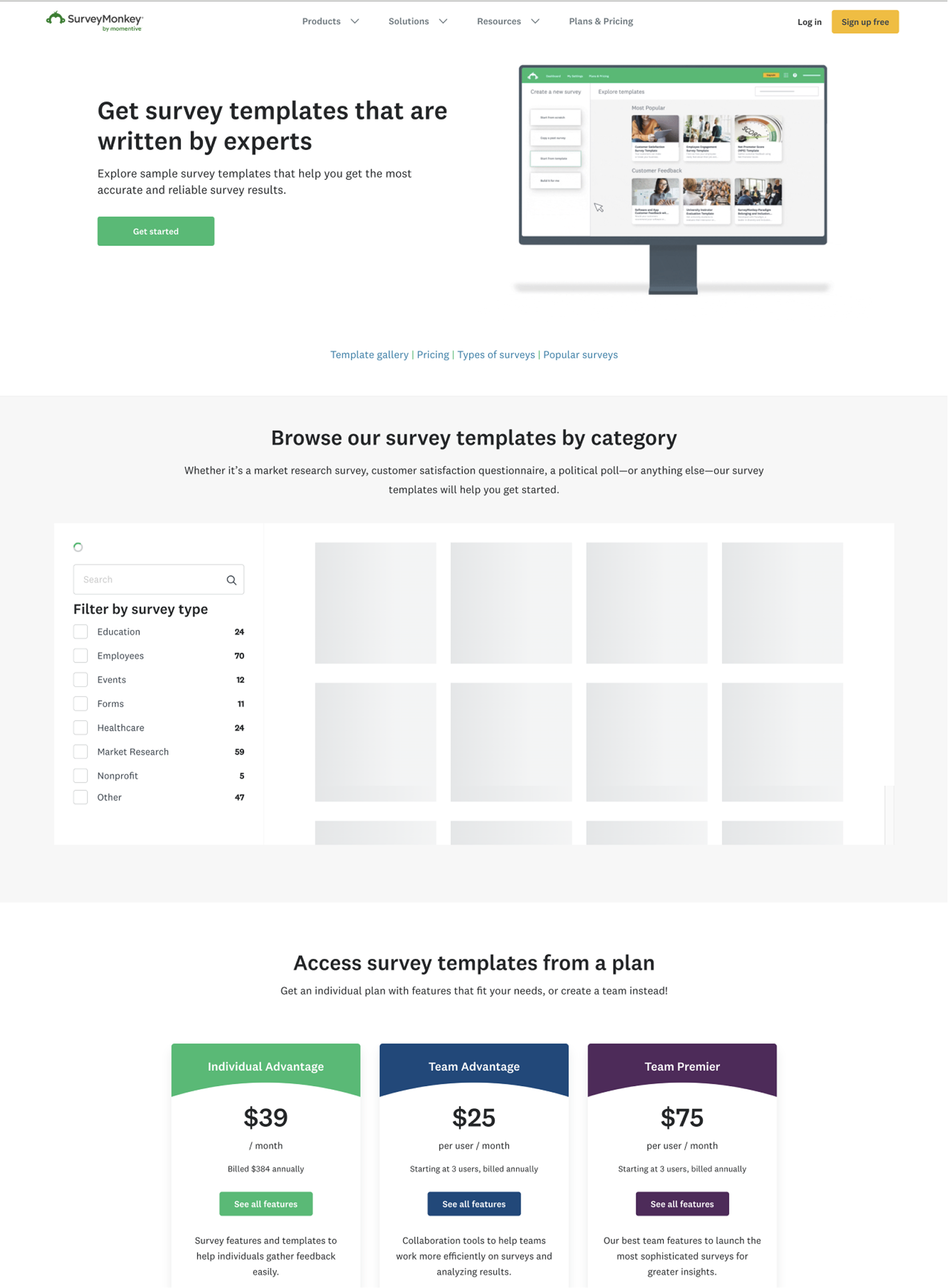
The Template Gallery is a high-traffic entry point and a major source of organic acquisition. It was built on outdated iFrames, which caused poor styling, inconsistent structure, slow loads, and weak search rankings.
Because so much traffic landed there, fixing it had a clear path to measurable growth.
The decision that changed the design
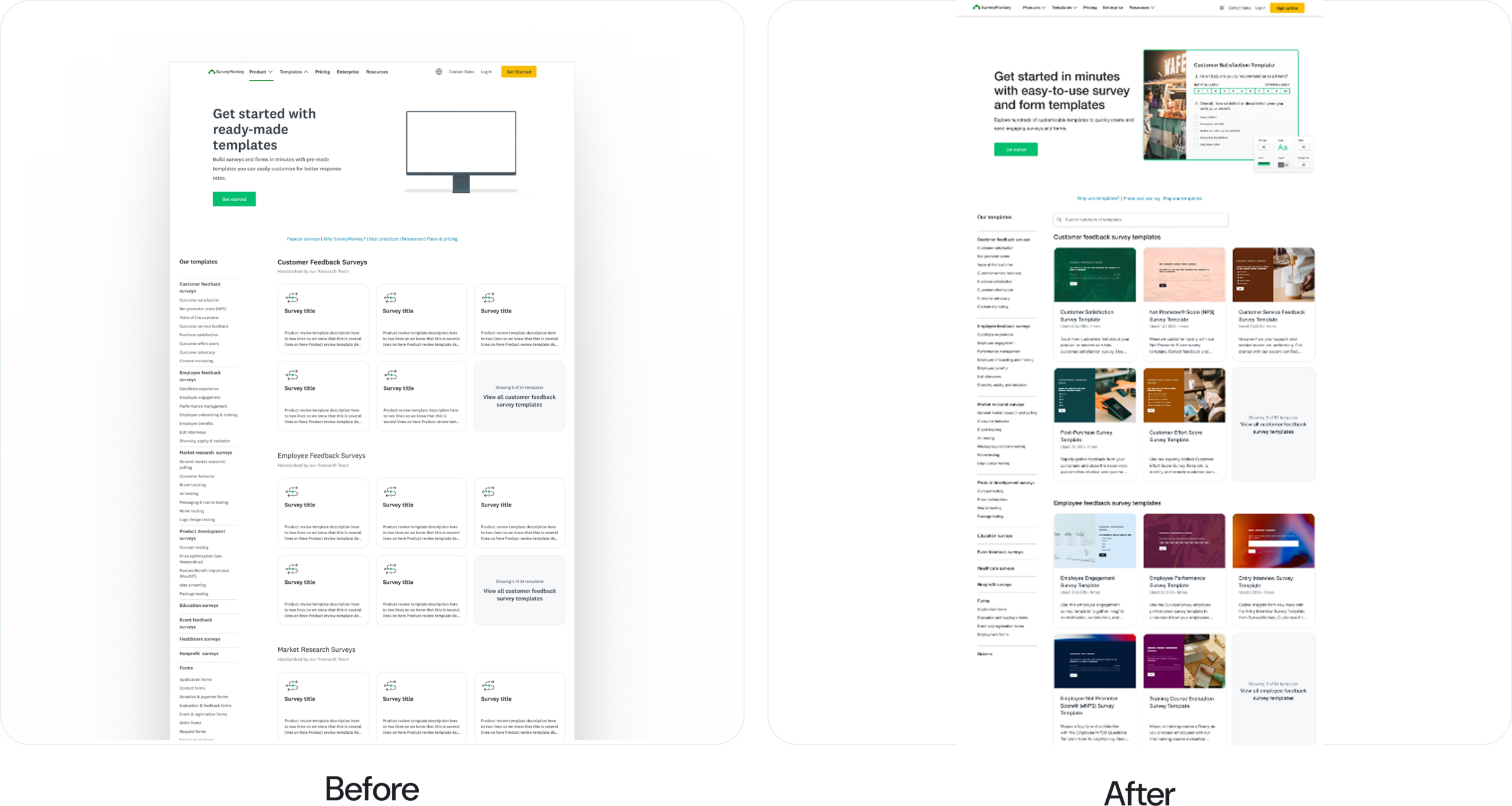
The first version organized templates by category and left out search. Two rounds of usability testing, which I ran with another designer, changed that. We asked participants to find specific templates and complete open-ended tasks. The findings pointed to search as a primary way to find templates, not a fallback to browsing. Search was added, and in later testing it became the preferred way to navigate. Participants also said graphics would help break up a text-heavy page.
A related shift happened earlier: the team moved away from an accordion layout because of scalability and development constraints. That decision wasn't mine. I supported it and worked within it.
My piece: responsive design and documentation
After helping with early prototypes, I took over responsive design and all documentation. I built on the existing component library, which kept the UI consistent and sped up implementation. Under the timeline, desktop and tablet got the most attention and mobile got focused optimizations. This was disciplined execution rather than a design call, and I'm describing it that way on purpose.
Outcome
These results came from the whole redesign: removing the iFrames, the new navigation, and search. I can't isolate my share. What I can point to is the research behind the search decision and ownership of responsive execution.
Metrics
278%
Increased organic sessions
39%
dropped bounce rates
1.8%
Lift in sign up conversion
What I'd do differently
With more time I'd have invested further in the mobile experience and refined search and filtering logic toward more personalized discovery. I'd also have pushed to define success metrics for the research rounds up front, so the link between the testing findings and the traffic gains was easier to trace.
Selected Works